What Are the Benefits of Neem Soap for Your Monsoon Skincare Routine?
|
Neem soap helps manage monsoon skin problems because of its natural antibacterial, antifungal, and anti-inflammatory properties. It fights fungal infections in damp areas like underarms and feet, controls monsoon-triggered acne and breakouts, reduces itchiness and body odour, and cleanses without stripping the skin's natural moisture. Using a neem-based soap daily, especially combined with tulsi, is one of the simplest ways to keep skin clear and infection-free throughout the rainy season. |
Chai, window seat, that first-rain smell, monsoon has its charm, no doubt. But ask your skin how it's feeling and you'll probably get a different answer. Humidity climbs, sweat mixes with pollution, and somewhere in between you notice a stray pimple or an itch that wasn't there last week. Neem's been the go-to answer for this in Indian homes forever, and honestly, it still holds up. This blog gets into why monsoon is rough on skin, what neem soap actually does about it, and how to build that into a routine you'll actually stick with.
Why Monsoon Is Hard on Your Skin
Notice more breakouts or a random rash around July-August? You're not imagining it. Moisture in the air throws off your skin's pH, and that opens the door for bacteria and fungus to move in. Throw in sweat, humidity, and general rain-grime, and pores clog up faster than usual. Dermatologists bring this up every single year around this time, it's practically seasonal at this point.
Where Neem Fits In
Neem, Azadirachta indica, if you want to get technical, has been part of Indian households for generations. Leaves on the bed during chicken pox, twigs used as toothbrushes in villages, that sort of thing. Long before "natural skincare" became a hashtag, neem was already doing the job. And it's not just tradition talking. Studies have actually confirmed neem's antibacterial, antifungal, and anti-inflammatory properties, largely due to compounds like nimbin and nimbidin. So when people talk about the benefits of neem soap, there's real pharmacology behind it, not just grandma's advice (though grandma was usually right too).
The Actual Benefits of Neem Soap in Monsoon
Fungal infections don't stand a chance
Damp clothes, wet shoes, skin folds that never quite dry, monsoon is basically a fungal season, and most people only notice once there's an itchy patch that refuses to go away. Compounds like nimbidol and gedunin in neem are known to work against fungal growth. Underarms, between the toes, behind the knees, these spots stay damp the longest, so they're usually where trouble starts first. A neem wash helps keep things in check before it turns into something you need a dermatologist for.
Breakouts calm down
Here's what happens: humidity confuses your skin into overproducing oil. That oil, plus sweat, plus whatever pollution settled on your face during the commute, pores clog fast. Neem's antibacterial action goes straight after the bacteria causing the acne, not just the surface symptom. Most people notice a real difference within a couple of weeks. Not instant, but it's working on the actual cause.
Itchy, irritated skin settles down too
That prickly feeling after getting caught in the rain, or from clothes rubbing against damp skin all day, that's mild inflammation, basically. Neem's anti-inflammatory compounds ease this at the source, cutting down redness and the urge to keep scratching. Anyone dealing with sensitive skin or eczema tends to notice this flares up worse in monsoon, so this one matters more than people think.
Body odour stays away
Sweat on its own doesn't smell, it's bacteria breaking it down that causes the odour, and monsoon means more sweating even on days you're not doing much. Neem goes after that bacteria directly instead of just covering the smell with fragrance, which is what most regular soaps do.
Your skin doesn't dry out either
Common mistake: assuming oily monsoon skin needs a stronger, harsher soap. Usually backfires. Chemical soaps loaded with SLS strip natural oils, and your skin overcompensates by producing even more, which is the opposite of what you wanted. Handmade neem soap made the cold-process way keeps its natural glycerin intact, so it cleans properly without that rebound oiliness.
Small cuts and bites heal a bit faster too
Mosquito bites, small slips on wet floors, rashes from sitting in damp clothes too long, monsoon brings all of it. Neem's been used for wound healing for ages, and its antiseptic quality helps stop these minor issues from turning into something worse. Small benefit, but a genuinely useful one during these months.
Building a Monsoon Skincare Routine Around It
No need for ten products here. A basic routine works fine:
Morning wash with neem soap clears out overnight sweat and oil. If you get caught in the rain, rinse off as soon as you reasonably can, don't let damp clothes sit against your skin. Evening wash takes care of the day's pollution before it settles overnight. And once or twice a week, follow up with a light moisturiser if your skin's drying out despite the humidity - yes, that happens to plenty of people, oddly enough.
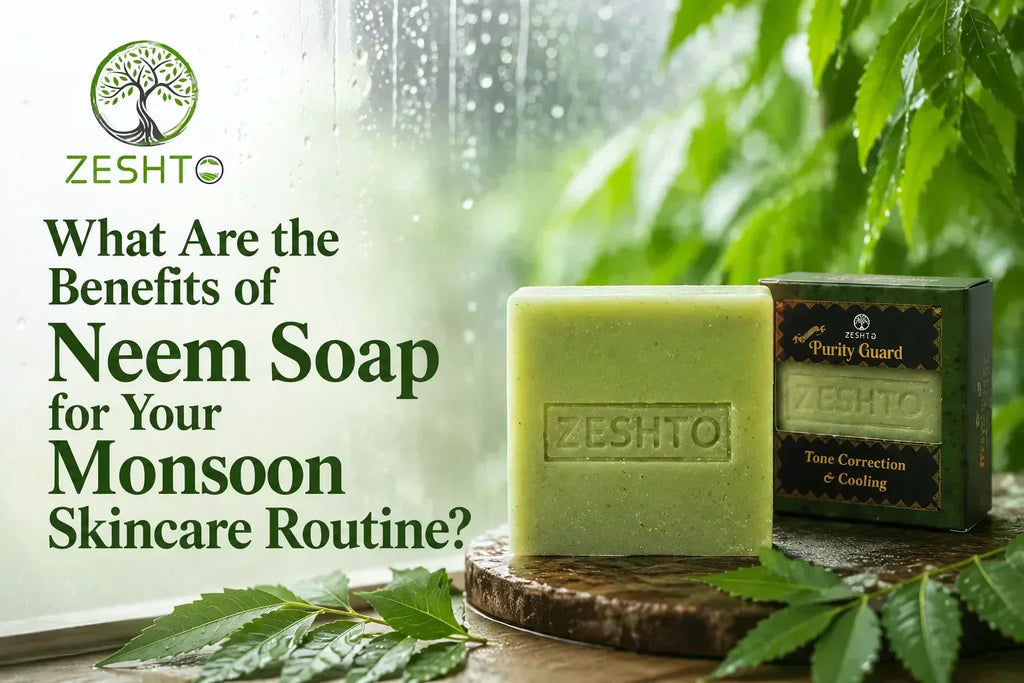
If breakouts and body odour are both showing up together, neem paired with tulsi tends to work better, since tulsi brings its own antibacterial and immunity properties into the mix. That's more or less why the Neem & Tulsi Soap – Zeshto Purity Guard was made this way, to deal with both problems in one bar instead of needing two separate products.
Wrapping It Up
Monsoon skin trouble isn't something you just have to live with. Building a monsoon skincare routine around something as basic and time-tested as neem genuinely helps, not overnight, but with consistency, which is really the whole point. Indian households figured this out generations ago; science is just catching up.
If you want a soap made specifically for this season, the Neem & Tulsi Soap – Zeshto Purity Guard is worth trying. Handmade, no harsh chemicals, built for exactly this kind of weather. Small switch, but it adds up over the next few months.
Not sure which soap fits your skin concern, or want some guidance before buying? Get in touch with us, happy to help you figure out what actually works for your skin.
Frequently Asked Questions
1. Is neem soap good for monsoon skin?
Yes, neem soap is particularly effective during monsoon because humidity creates ideal conditions for bacteria and fungus to thrive on skin. Neem's natural antibacterial and antifungal compounds help prevent these issues before they turn into infections. It also controls excess oil caused by humidity, reduces breakouts, and calms irritation from damp clothing or rain exposure, making it a practical daily-use option for the rainy season.
2. Can neem soap prevent fungal infections?
Neem contains compounds like nimbidol and gedunin, which have shown antifungal activity in studies. During monsoon, damp areas such as underarms, feet, and skin folds are prone to fungal growth due to prolonged moisture. Regular use of neem soap in these areas helps keep fungal populations under control, reducing the chances of infections developing, especially for people who spend long hours in wet clothing or shoes.
3. Does neem soap help with acne caused by humidity?
Yes, humidity often triggers excess oil production, which clogs pores and leads to breakouts. Neem's antibacterial properties target the bacteria responsible for acne directly, rather than just treating surface symptoms. Most people notice visible improvement within a couple of weeks of consistent use. It works best as part of a regular routine rather than a one-time treatment for sudden breakouts.
4. Is neem soap suitable for sensitive skin?
Neem is generally gentle, but it is still a potent natural ingredient, so a patch test is recommended before regular use, especially for very sensitive or broken skin. For most people, neem's anti-inflammatory properties actually help calm irritation and redness rather than cause it. Those with eczema or reactive skin often find it soothing during monsoon, when flare-ups tend to be more frequent.
5. Can neem soap be used daily?
Yes, neem soap is mild enough for daily use for most skin types, particularly during monsoon when frequent washing helps remove sweat, humidity buildup, and pollution from the skin. Using it once in the morning and once in the evening is a common routine. People with very dry skin may want to follow up with a light moisturiser to maintain hydration.
6. Does neem soap help with body odour?
Yes, body odour is caused by bacteria breaking down sweat on the skin, and neem's antimicrobial properties target this bacteria directly rather than just masking the smell with fragrance. This makes it especially useful during monsoon, when humidity leads to more sweating even without much physical activity, and is a common concern for people who commute in wet, humid conditions.
7. Is neem and tulsi soap better than plain neem soap for monsoon?
For monsoon-specific concerns like breakouts combined with body odour, neem and tulsi together tend to work better than neem alone. Tulsi adds its own antibacterial and immunity-supporting properties, complementing neem's antifungal and anti-inflammatory action. This combination addresses multiple monsoon skin issues at once, which is why many natural soap formulations pair the two ingredients specifically for rainy-season skincare.
8. Will neem soap dry out my skin?
Handmade neem soap made using the cold-process method typically retains natural glycerin, which prevents the harsh drying effect seen with commercial soaps containing SLS. Chemical-heavy soaps strip natural oils, causing skin to overcompensate with more oil production. Neem soap cleanses thoroughly while maintaining the skin's natural moisture balance, making it a better option for monsoon than most people assume.
9. Can neem soap help with monsoon rashes or insect bites?
Yes, neem has a long history of use for wound healing and has antiseptic properties that help prevent minor skin issues from worsening. Monsoon often brings mosquito bites, small cuts from wet surfaces, and rashes from damp clothing. Washing affected areas with neem soap can support healing and reduce the risk of secondary infection, though deeper wounds should still be checked by a doctor.
10. How long does it take to see results from using neem soap?
Most people notice initial improvements in breakouts, itchiness, or odour within one to two weeks of consistent use, with more noticeable changes after about a month. Neem works gradually by addressing the underlying bacterial or fungal cause rather than providing an instant fix. Consistency matters more than frequency, so daily use as part of a simple routine tends to give the best results.