Sandalwood Soap Benefits for Skin: Uses and How to Use It
|
Sandalwood soap benefits the skin by gently cleansing dirt and excess oil, soothing mild irritation, and supporting brighter, more even-looking skin. Its naturally associated antibacterial and anti-inflammatory properties may also help keep pores clean and calm acne-prone skin. With consistent use, proper moisturising, and sun protection, sandalwood soap can support healthier-looking skin without excessive dryness. |
If you've been Googling "Sandalwood Soap Benefits" before adding one more bar to your bathroom shelf, here's the short answer: sandalwood soap cleanses without stripping your skin, fades tan and dark spots over time, calms redness and irritation, controls oil on humid Indian days, and gives your skin that soft, even-toned glow our grandmothers swore by. It works because of real, time-tested reasons, not fancy marketing. In this blog, we'll break down why sandalwood soap genuinely helps your skin and the right way to use it daily for visible results.
Why Sandalwood Has Been India's Go-To Skincare Ingredient for Centuries
Long before skincare had 10-step routines, Indian households were using chandan (sandalwood) paste for everything from summer heat rashes to wedding-day glow. That's not nostalgia talking, sandalwood genuinely has antibacterial and anti-inflammatory properties that keep skin clean and calm. Add to that our tropical weather, dust, and pollution, and it's easy to see why sandalwood soap has stayed relevant even in 2026, when everyone's chasing "clean beauty" and going back to ingredients they can actually pronounce.
Sandalwood Soap Benefits: What Makes It Genuinely Good for Skin
1. Deep Cleansing Without Drying Out Your Skin
Most soaps either clean well and leave skin tight and dry, or they're gentle but don't really clean. Sandalwood soap manages both. It clears out sweat, oil, and grime, especially useful in India's humidity, while still leaving skin feeling soft, not squeaky. This is largely because sandalwood cleanses at a deeper level without disturbing the skin's natural moisture barrier, unlike soaps loaded with harsh detergents (SLS) that clean by literally stripping away oils. That's why people with dry or combination skin often switch to sandalwood soap and notice their skin doesn't feel pulled tight right after a bath, even in peak summer.
2. Naturally Brightens Skin Tone
This is probably the most talked-about benefit of them all. Regular use helps fade tan, sun spots, and uneven patches, giving skin a more even and radiant look over a few weeks. It's not an overnight bleach, it's a gradual, natural brightening that doesn't harm your skin barrier. A lot of this comes down to sandalwood's mild exfoliating action, which helps clear away dead, dulling skin cells that build up from dust, pollution, and sun exposure. For anyone dealing with tan lines from daily commutes or two-wheeler rides, consistent use over 4-6 weeks tends to show a noticeably more even complexion, especially on the face, neck, and hands.
3. Calms Irritated and Sensitive Skin
If your skin turns red or itchy from heat, sweat, or even a new face wash, sandalwood's anti-inflammatory nature helps cool things down. It's genuinely helpful for people dealing with mild acne, rashes, or skin that reacts to almost everything. Sandalwood also has a mild cooling effect on the skin, which is one reason it's traditionally applied during summer and used to soothe prickly heat, sunburn, and post-shave irritation. If your skin tends to flare up after using scented products or spending time outdoors, a sandalwood-based soap is usually a safer, gentler choice than heavily fragranced commercial bars.
4. Controls Oil Without Over-Drying
Sandalwood is really good for people with combination skin, which is what most of us have when it is hot outside during the summer in India. It helps to make the pores on your face a little smaller and it keeps the oil under control all day long so your face does not feel greasy by the middle of the day. Sandalwood is great because it helps to control the amount of oil your skin produces without making it too dry which's what happens when you use some harsh soaps that are meant to help with acne. These soaps can dry out your skin. Make it produce even more oil, which is not what you want. Sandalwood is good to use all year, not just when your skin is being problematic. Sandalwood is an option because it helps to keep your skin balanced and that is what you need to keep your skin looking and feeling good.
5. Fights Acne-Causing Bacteria
Sandalwood's antibacterial properties help keep breakouts under control. It won't replace a proper acne treatment, but as part of your daily cleansing routine, it does its bit to keep pores clean and bacteria at bay. It's particularly useful for back and body acne caused by sweat and friction from clothing, since regular bathing with a sandalwood-based soap can reduce bacterial buildup in areas that are harder to treat with spot creams. Many people also find it helps reduce the redness and marks left behind after a breakout heals, giving skin a chance to recover more evenly.
How to Use Sandalwood Soap the Right Way
Using it right matters just as much as choosing the right soap. Here's a simple routine:
-
Wet your face or body with water. Hot water removes the oils from your skin.
-
Make a lather by rubbing the soap between your hands. Don't rub it on your skin.
-
Massage your skin gently in movements. Do this for 30 to 40 seconds. Pay attention to oily areas, like your T-zone.
-
Rinse thoroughly and pat dry, don't rub with the towel.
-
Follow up with a light moisturiser, even if your skin feels clean and matte, to lock in hydration.
For best results, use it twice a day, once in the morning and once before bed, and give it at least 3-4 weeks before expecting visible brightening or tone improvement. Skincare is consistency, not magic.
Our Recommendation for a Genuinely Good Sandalwood Soap
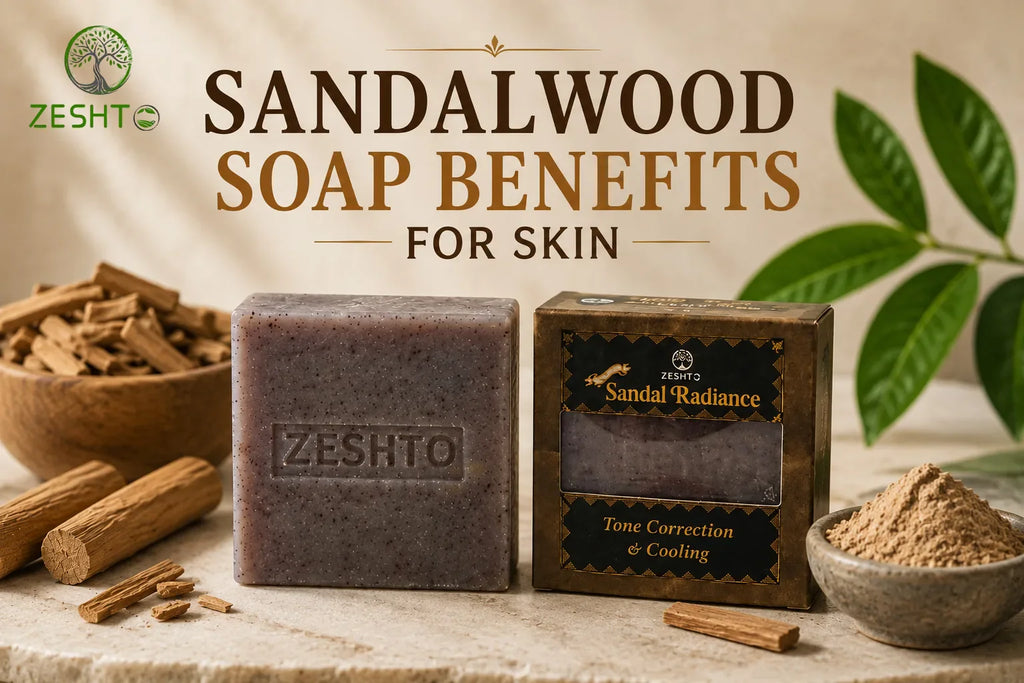
If you want a sandalwood soap that has ingredients and not just a nice smell you should try Zeshto Sandal Radiance. This soap is made with sandalwood and other natural ingredients that are good for your skin especially if you have Indian skin and live in this kind of weather. Zeshto Sandal Radiance is a choice for everyday use if you want cleaner skin, brighter skin and calmer skin without any bad chemicals. Zeshto Sandal Radiance is really an option for people who want to use a sandalwood soap that actually works.
A Quick Note on Choosing Wisely
With so many soaps claiming sandalwood benefits, always check the ingredient list before you buy. A soap with "sandalwood fragrance" listed as the second-last ingredient is very different from one with actual sandalwood oil or extract near the top. Patch-test any new soap on your inner arm for 24 hours if you have sensitive skin, just to be safe.
Conclusion
Sandalwood soap isn't a trend that showed up overnight, it's something Indian skincare has relied on for generations, and it still holds up today because the Sandalwood Soap Benefits are backed by real, time-tested properties rather than hype. Whether your concern is dullness, oiliness, or occasional breakouts, a good sandalwood soap used consistently can make a visible difference to your skin. If you have any questions about which product suits your skin type best, feel free to contact us, we're happy to help you figure out what works for you.
Frequently Asked Questions
1. What are the main sandalwood soap benefits for skin?
The main sandalwood soap benefits include gentle cleansing, removal of excess oil and impurities, soothing mild skin irritation, and supporting a brighter, more even-looking complexion. Sandalwood is traditionally valued for its antibacterial, anti-inflammatory, and calming properties. Regular use may also help remove dead skin cells and reduce the appearance of dullness and uneven skin tone. However, results depend on the soap's formulation, sandalwood content, individual skin type, and consistent use as part of a balanced skincare routine.
2. Is sandalwood soap good for daily use?
Yes, sandalwood soap can be suitable for daily use when it contains gentle cleansing ingredients and genuine sandalwood oil, powder, or extract. It may help remove sweat, dirt, excess oil, and impurities without causing excessive dryness. People with sensitive or very dry skin should start by using it once daily and observe how their skin responds. Following cleansing with a suitable moisturiser can help maintain hydration and protect the skin barrier, especially when sandalwood soap is used regularly.
3. Does sandalwood soap help brighten skin?
Sandalwood soap may help improve the appearance of dull and uneven-looking skin when used consistently. Gentle cleansing and mild exfoliating action can remove dead skin cells, surface impurities, and excess oil that make the complexion appear dull. Over time, the skin may look cleaner, smoother, and more radiant. However, sandalwood soap does not permanently change natural skin colour or provide instant whitening. Visible improvements depend on consistent skincare, sun protection, product formulation, and individual skin characteristics.
4. Can sandalwood soap remove tan and dark spots?
Sandalwood soap may gradually improve the appearance of mild tanning and uneven pigmentation by cleansing the skin and helping remove accumulated dead skin cells. Regular use can support a brighter and more even-looking complexion, particularly when combined with daily sun protection. However, sandalwood soap cannot completely remove deep pigmentation, persistent dark spots, or medically diagnosed skin conditions. People with significant or changing pigmentation should consult a qualified dermatologist for appropriate diagnosis and treatment rather than relying only on skincare products.
5. Is sandalwood soap good for oily and acne-prone skin?
Sandalwood soap can be beneficial for oily and acne-prone skin because it helps remove excess sebum, sweat, dirt, and impurities that may contribute to clogged pores. Sandalwood is also associated with antibacterial and soothing properties that may support calmer-looking skin. However, sandalwood soap is not a medical treatment for moderate or severe acne. Choose a gentle formulation, avoid excessive washing, use a suitable moisturiser, and consult a dermatologist if breakouts are persistent, painful, or causing scars.
6. Can sandalwood soap help reduce pimples?
Sandalwood soap may help reduce occasional pimples by keeping the skin clean and removing excess oil, sweat, and impurities that can contribute to clogged pores. Its traditionally recognised soothing and antibacterial properties may also help maintain cleaner, calmer-looking skin. However, results vary depending on the cause and severity of breakouts. Sandalwood soap should be considered part of a regular cleansing routine rather than a replacement for proven acne treatments recommended by healthcare professionals for persistent or severe acne.
7. Is sandalwood soap suitable for sensitive skin?
Sandalwood soap may be suitable for sensitive skin when formulated without harsh detergents, excessive fragrances, or other potentially irritating ingredients. The soothing properties associated with sandalwood can help calm mild redness and discomfort. However, sensitive skin reacts differently to skincare ingredients, including natural ones. Performing a patch test before regular use is recommended. Stop using the soap if persistent redness, itching, burning, or irritation develops, and consult a dermatologist when skin reactions are severe or continue after discontinuing the product.
8. How long does sandalwood soap take to show results?
Sandalwood soap may take several weeks of consistent use before noticeable improvements in skin texture, cleanliness, oil balance, or overall appearance become visible. Some users may notice softer and cleaner-feeling skin sooner, while changes in dullness or uneven-looking skin tone can take longer. Results vary according to skin type, product formulation, skincare routine, sun exposure, and individual concerns. Consistent cleansing, moisturising, and daily sun protection are important for achieving and maintaining healthier-looking skin over time.
9. How should I use sandalwood soap for the best results?
Wet the skin with lukewarm water, create a lather between your hands, and gently massage the foam onto the skin for approximately 30 to 40 seconds. Rinse thoroughly and pat the skin dry with a clean towel instead of rubbing. Apply a suitable moisturiser afterward to maintain hydration. Depending on your skin type and product formulation, sandalwood soap can generally be used once or twice daily. Avoid excessive cleansing because overwashing can cause dryness, irritation, and disruption of the skin barrier.
10. What should I look for when buying sandalwood soap?
Look for sandalwood soap containing genuine sandalwood oil, powder, or extract rather than products that rely mainly on artificial sandalwood fragrance. Review the complete ingredient list and choose formulations without unnecessarily harsh cleansing agents, particularly if you have dry or sensitive skin. Consider your skin type, fragrance sensitivity, and existing skin concerns before purchasing. Performing a patch test before regular use can also help identify potential irritation and determine whether the product is suitable for your individual skincare routine.