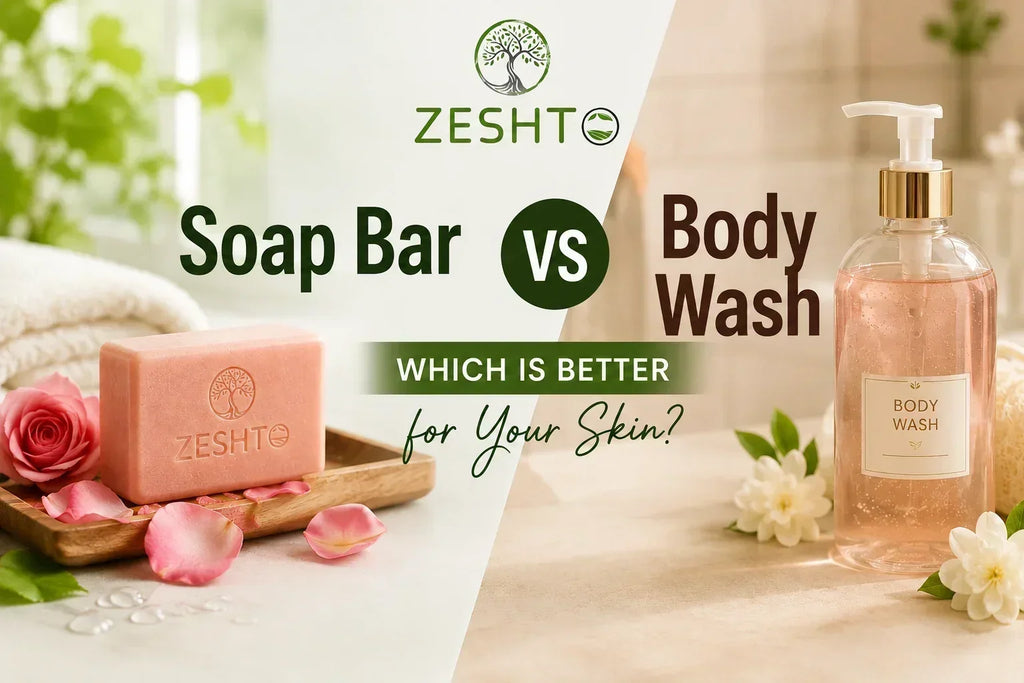
Soap Bar vs Body Wash: Which Is Better for Your Skin?
|
The choice ultimately depends on your skin type, as there is no definitive winner. Bar soap tends to be cheaper, kinder to the planet, and works well if your skin is normal or on the oilier side, though older-style bars can run alkaline and leave skin feeling tight. Body wash usually skews gentler and more hydrating thanks to added moisturizers like glycerin, which makes it a better fit for dry or reactive skin. For dry skin, lean towards a hydrating body wash or a moisturizing syndet bar. For oily or normal skin, a decent bar soap does the job just fine. |
Stand in front of the bath aisle in any store in India and you'll see it, one side stacked with soap bars, the other lined with body wash bottles, and somewhere in between, many confused shoppers. This blog looks at how each one actually behaves on skin, why the "bar vs bottle" fight isn't as simple as it used to be, what our weather and water truly demand from a cleanser, and how you can pick the right one without overthinking it. Please take a moment to enjoy a cup of chai; this won't take long to read.
How Soap Bars and Body Wash Actually Work on Skin
When we look beyond the marketing, both serve the same fundamental purpose: surfactants attach to oil, sweat, and grime, allowing water to wash them away. Where they part ways is in the formulation. Bars are typically made through saponification, and that process usually pushes their pH higher than skin's natural range of roughly 4.5 to 5.5. That's the science behind the squeaky, slightly tight feeling some people get after a bar. Body wash skips this route; it's water-based with conditioning agents and oils mixed in, which is part of why it feels a touch softer on the way out of the shower.
None of this makes body wash the automatic champion, though. Plenty of Indian brands now make syndet bars, essentially soap-free bars built closer to the skin's own pH, so you get eco-friendly packaging without the harshness people usually complain about in old-school soaps.
The Real Trend in 2026: It Is Not About the Format, It Is About the Formula
Dermatologists have largely ceased to view syndet bars as a contentious issue. What's actually sitting inside the bar or the bottle matters far more than which shape it took. A recent report on this topic pointed out that the right pick depends heavily on skin type, lifestyle, and sensitivity levels rather than any blanket rule.
That shift is precisely why more brands are building around active ingredients instead of just pushing a format. Dry or reactive skin should be scanning labels for glycerin, hyaluronic acid, or floral extracts, not deciding purely on bar versus bottle.
Is Bar Soap Better Than Body Wash for Indian Skin and Weather?
Here's where it gets specific to us. India swings between sticky coastal humidity and bone-dry northern winters, and on top of that, a lot of our water is harsh, carrying extra minerals that don't play nice with soap. Hard water plus an alkaline bar can leave skin drier than expected simply because the lather doesn't rinse off cleanly.
If you're in a humid city and sweating through most of your day, a light bar that rinses off fast can actually feel wonderful and gets the job done without any leftover residue. But if your skin turns flaky, tight, or irritated once winter hits, a hydrating body wash or a floral, moisture-rich bar will usually treat your skin far better than a stripping one.
If a fragrant, slightly indulgent bath ritual sounds appealing, take a look at the Zeshto Rose Revive. It's built around a calming rose formula meant to cleanse gently while still feeling like a treat, which suits people looking for something more nourishing than a plain, drying bar.
Quick Comparison Table
| Factor | Bar Soap | Body Wash |
|---|---|---|
| pH Balance | Can be alkaline unless it is a syndet bar | Usually closer to skin's natural pH |
| Hydration | Simpler formula, less added moisture | Often infused with oils and glycerin |
| Packaging | More eco friendly, less plastic | Comes in plastic bottles |
| Hygiene | Can collect bacteria if left wet | More hygienic in pump bottles |
| Cost | Generally more affordable | Slightly higher per use |
So, Which One Should You Actually Choose?
There isn't a universal answer, and honestly, there doesn't need to be. For normal or oily skin, a quick no-fuss shower with a solid bar soap handles it without any drama. For skin that gets itchy, dry, or irritated easily, a nourishing body wash or a moisture-heavy bar will treat your skin barrier a lot better in the long run.
What matters more than the bar or bottle is what's actually written on the label. Steer clear of harsh sulfates and loud synthetic fragrances if your skin tends to react, and pick ingredients that suit your skin type first and format second.
Final Thoughts
The soap bar vs. body wash conversation isn't really about crowning a winner; it's about listening to what your skin is telling you. Notice how your skin feels right after a bath, not how the packaging looks on a shelf. Tightness and dryness mean it's time to switch things up; softness and comfort mean you've already got it right.
Not sure which formula actually suits your skin? Our team's delighted to help you figure it out. Go ahead and get in touch with us, and we'll help you land on a routine that genuinely fits your skin and your day-to-day life.
Frequently Asked Questions
1. Is bar soap better than body wash for daily use?
It depends on your skin type rather than one being better overall. Bar soap works fine for daily use if you have normal or oily skin, since it cleans effectively and is budget friendly. However, if you shower more than once a day or live in a hot, humid climate, a mild body wash may feel more comfortable since it is less likely to leave skin feeling stripped. The key is checking how your skin feels after washing, not just following a general rule.
2. Does bar soap dry out skin more than body wash?
Traditional bar soaps can be more drying because they tend to have a higher, more alkaline pH compared to skin's natural acidity. This can disturb the skin barrier over repeated use, especially in people with already dry or sensitive skin. However, this is not true for all bars. Modern syndet bars are formulated to be soap free and closer to skin's natural pH, so they clean without the tight, dry feeling older soap bars are known for.
3. Which is more hygienic, bar soap or body wash?
Body wash is generally considered more hygienic because it sits in a sealed pump bottle, limiting exposure to air, water, and bacteria. Bar soap, especially when left sitting in a wet soap dish, can collect moisture and become a breeding ground for bacteria over time. This does not mean bar soap is unsafe, using a well draining soap dish and rinsing it before use significantly reduces this risk and keeps it perfectly safe for regular use.
4. Is body wash suitable for sensitive skin?
Yes, body wash is often recommended for sensitive skin because it typically contains hydrating ingredients like glycerin, oils, and conditioning agents that help maintain the skin barrier. It also tends to have a gentler, skin friendly pH compared to traditional bar soaps. That said, sensitivity varies from person to person, so it is important to check the ingredient list and avoid harsh sulphates or strong fragrances even when choosing a body wash.
5. Which one is more eco friendly, bar soap or body wash?
Bar soap generally wins on eco friendliness since it usually comes with minimal packaging, often just paper or cardboard, and produces less plastic waste overall. Body wash, being liquid, requires plastic bottles which contribute more to environmental waste unless you opt for refill packs. If sustainability is a priority for you, bar soap or a body wash brand offering refill options would be the more responsible choice for the environment.
6. Can I use body wash on my face?
It is generally not recommended to use regular body wash on your face, since facial skin is thinner and more sensitive than the rest of the body. Body wash formulas are designed for tougher skin and may be too strong or unbalanced for facial use, potentially causing dryness or breakouts. It is best to use a dedicated facial cleanser and reserve body wash strictly for the neck downward.
7. Does hard water affect the choice between soap bar and body wash?
Yes, hard water can make bar soap feel less effective since it does not lather as easily and can leave a slight residue on skin after rinsing. This residue can sometimes contribute to dryness or a filmy feeling. Body wash tends to rinse off more smoothly even in hard water areas since it is water based. If you live in a hard water region, this is worth factoring into your choice.
8. Are natural or herbal soap bars better than regular body wash?
Natural or herbal soap bars can be a great option since they often skip harsh chemicals and rely on simpler, plant based ingredients. However, natural does not always mean gentler, some herbal bars can still be alkaline or contain essential oils that irritate sensitive skin. It is important to check the actual ingredient list rather than assuming a bar is mild just because it is labeled natural or herbal.
9. Which lasts longer, a bar soap or a bottle of body wash?
Bar soap generally lasts longer per rupee spent, since a single bar can last several weeks with normal daily use and is used in smaller amounts per wash. Body wash tends to get used up faster because people often dispense more liquid than needed. If cost effectiveness over time matters to you, bar soap usually offers better value, though this can vary based on brand and formulation.
10. Should I switch between bar soap and body wash based on season?
Yes, many people find it helpful to adjust their cleanser based on the season. In hot, humid months, a light bar soap can feel refreshing and helps manage sweat and oil. In colder, drier months, switching to a hydrating body wash or a moisturizing bar can help prevent the dryness and flakiness that cold weather often brings to the skin.