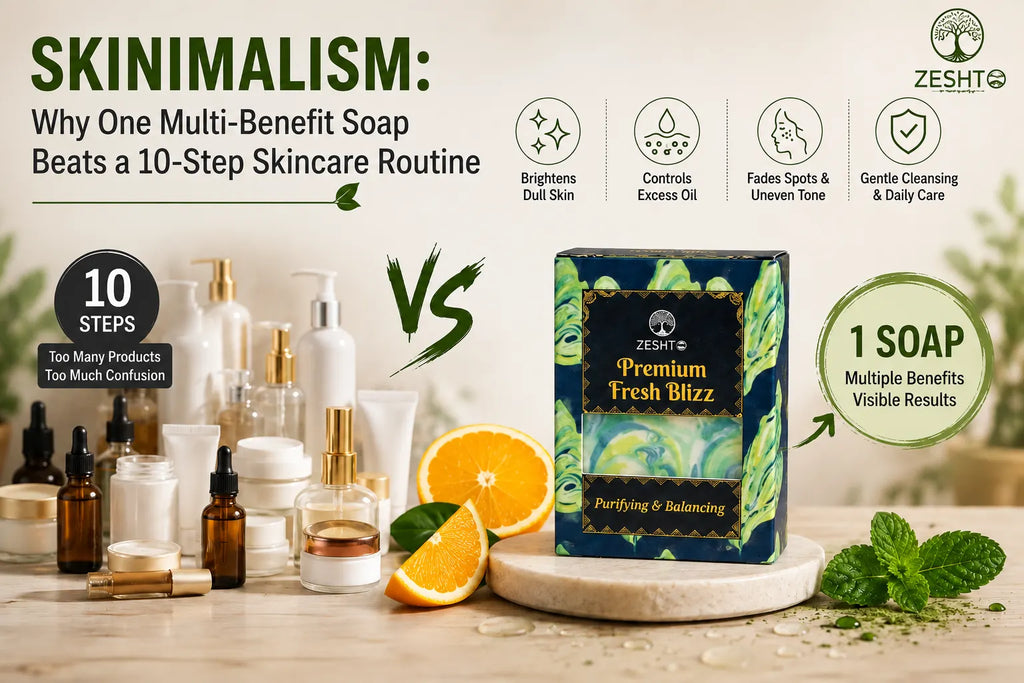
Skinimalism: Why One Multi-Benefit Soap Beats a 10-Step Skincare Routine
|
Skinimalism is the 2026 skincare trend that favours fewer, multi-benefit products over long, complicated routines. Instead of using separate serums, cleansers, and treatments, a minimal skincare routine relies on one well-formulated product, like a vitamin C soap, that brightens skin, controls oil, and evens out tone in a single step. This approach reduces the risk of irritation from over-layering, is easier to stay consistent with, and often gives better results than a crowded 10-step routine because the skin isn't overwhelmed with conflicting actives. |
If your bathroom shelf currently looks like a mini pharmacy, three serums, two toners, a jade roller you've used twice, you're not alone, and you're also not doing your skin any favours. This blog talks about skinimalism, the shift away from overloaded routines that's taking over skincare conversations in 2026, why fewer but smarter products often work better than ten mediocre ones, and how something as simple as a good vitamin C soap can genuinely replace half your shelf. If you've been quietly wondering whether you actually need all those products, this one's for you.
What Exactly Is Skinimalism?
The term is a mix of "skin" and "minimalism," and it basically means using fewer products that are actually effective, instead of layering on everything that promises glowing skin. It's a reaction to the whole K-beauty-inspired 10-step routine trend that dominated for years: cleanser, toner, essence, serum, ampoule, eye cream, moisturiser, sunscreen, and whatever else got added along the way.
Turns out, all that layering wasn't doing what people thought. Dermatologists have been pointing out that over-layering stresses the skin barrier, and conflicting actives can actually cause more breakouts and sensitivity than they solve. Reports suggest a large chunk of women, some studies put it at over 60%, now prefer a simpler routine simply because the old approach felt exhausting and gave inconsistent results anyway.
The Problem With a 10-Step Routine
Beyond the time and money it eats up, an overloaded routine has a few real downsides:
-
Too many actives can cancel each other out or irritate the skin
-
It's hard to tell which product is actually causing an issue when something goes wrong
-
Consistency drops because who's got time for ten steps every single day
-
Your skin barrier ends up working overtime instead of staying calm and protected
The American Academy of Dermatology has pointed out something similar, noting that using too many products at once, especially more than one anti-ageing or active formula, often ends up irritating the skin rather than improving it. None of this means doing nothing. It means being more deliberate about what you're putting on your skin and picking things that do more than one job well. This is exactly why a minimal skincare routine built around multi-benefit ingredients is gaining so much traction right now.
Where a Multi-Benefit Soap Like Vitamin C Fits In
This is where things get practical, and honestly, this is the part that trips people up the most. Everyone assumes cutting down a routine means giving up results, but that's only true if you're just removing steps randomly. The smarter approach is replacing three or four single-job products with one that genuinely covers multiple concerns at once, and vitamin C happens to be one of the most versatile ingredients for exactly this.
A well-formulated vitamin C soap isn't just cleaning your skin, it's quietly doing a few other jobs while it's at it. It helps brighten dullness that builds up from sun exposure and pollution, works on fading patchiness and uneven tone over time, and controls excess oil so your skin doesn't feel greasy by afternoon. That's essentially three separate products, a brightening serum, an oil-control face wash, and a mild exfoliating cleanser, condensed into a single step you're already doing every day anyway.
There's also a practical side to this that people don't talk about enough. When you're using one product for a specific job, it's much easier to track how your skin is actually responding. No guessing which of your five products is causing that random breakout, no wondering if two actives are cancelling each other out. Your skin gets a clear, consistent input, and that consistency is honestly half the reason multi-benefit products tend to outperform elaborate routines over time.
This is basically the whole thinking behind the Vitamin C Soap – Zeshto Fresh Blizz. It's built to handle brightening and oil balance together, in your regular wash, so you're not adding extra steps just to chase results you could get from doing one thing really well. It fits the skinimalism approach almost perfectly, less clutter, same or better outcome, and a lot less second-guessing about what your skin actually needs.
Building Your Own Minimal Routine
If you want to try this without overhauling everything overnight, here's a simple way to start:
-
Cleanse with a multi-benefit soap that matches your main skin concern (brightening, oil control, hydration, pick one)
-
Moisturise with something light that suits your skin type
-
Protect with sunscreen, non-negotiable, every single day
That's genuinely it for most people. Add a targeted product only if you have a specific concern that these three steps aren't addressing, and give it a few weeks before deciding it's not working, skin needs time to adjust, not instant miracles.
It's Not About Doing Less, It's About Doing Better
People sometimes assume skinimalism means giving up on results, but that's not really the point. It's about being more selective, so every product in your routine is actually contributing something instead of just sitting there because a video told you it's essential. Once you stop double-and-triple-covering the same job with different products, skin tends to calm down and respond better anyway.
Wrapping It Up
A minimal skincare routine isn't a compromise, it's honestly the smarter way to go about this, especially if your current shelf has more products than you can name from memory. Picking one good, multi-benefit product over five average ones saves money, saves your skin the stress, and saves you the daily hassle of an elaborate routine you'll eventually stop following anyway.
If you're looking to simplify your own routine, the Vitamin C Soap – Zeshto Fresh Blizz is a good place to start, brightening and oil control in a single daily step, no extra products needed. And if you're not sure which soap actually fits your skin type or concern, feel free to get in touch with us, we're happy to help you figure out what your skin genuinely needs, minus the guesswork.
References:
-
The Rise of Skinimalism: Why Simplified Skincare Dominates 2026 – The Women's Post
-
Should I Apply My Skin Care Products in a Certain Order? – American Academy of Dermatology
Frequently Asked Questions
1. What is skinimalism in skincare?
Skinimalism is a skincare approach that focuses on using fewer, more effective products instead of long, multi-step routines. It emerged as a response to the popularity of 10-step K-beauty routines, which many dermatologists found were overwhelming the skin barrier. Instead of layering serums, essences, and creams, skinimalism prioritises multi-benefit formulas that do more with less, making routines simpler, more consistent, and often more effective for everyday skin health.
2. Why is a minimal skincare routine better than a 10-step one?
A minimal skincare routine reduces the chances of actives cancelling each other out or irritating the skin, which commonly happens with heavy layering. It's also easier to identify what's actually working, since fewer products means clearer results. Beyond the skin benefits, it saves time, money, and the daily hassle of following an elaborate routine, which is often why people abandon complicated skincare within a few weeks anyway.
3. Can one product really replace multiple skincare steps?
Yes, if the product is genuinely multi-functional. A good vitamin C soap, for example, can brighten skin, control oil, and gently exfoliate in one step, covering what would otherwise need a separate serum, face wash, and scrub. The key is choosing well-formulated products with proven ingredients rather than assuming any single product can replace an entire routine without the right active ingredients behind it.
4. Is vitamin C soap good for oily skin?
Yes, vitamin C is known for its oil-balancing and brightening properties, making it suitable for oily and combination skin types. It helps control excess shine while working on dullness and uneven tone at the same time. Since it's used during cleansing, it fits easily into a daily routine without adding extra steps, which is exactly the kind of multi-benefit approach skinimalism is built around.
5. How many skincare products should I actually use daily?
Most dermatologists following the skinimalism approach recommend three core steps: cleansing, moisturising, and sun protection. Additional targeted products can be added only if there's a specific concern these three don't address. Using more than this regularly increases the risk of irritation and makes it harder to track what's actually helping or harming your skin, especially with active ingredients layered together.
6. Does skinimalism work for acne-prone skin?
Yes, skinimalism can genuinely help acne-prone skin, since over-layering and conflicting actives are common triggers for breakouts. A simplified routine with one or two targeted, well-chosen products often reduces irritation and gives the skin barrier room to recover. The focus shifts from treating symptoms with multiple products to consistently using formulas that address the actual cause of breakouts.
7. What ingredients work best in a minimal skincare routine?
Multi-functional, well-researched ingredients work best, such as vitamin C for brightening and oil control, niacinamide for barrier support, and gentle exfoliants for texture. The idea is to choose ingredients that serve more than one purpose rather than adding separate products for each individual concern. This keeps the routine simple while still addressing multiple skin needs effectively.
8. Is skinimalism just a trend, or does it actually improve skin health?
While skinimalism has become a popular term in 2026, the underlying idea is backed by dermatological reasoning. Reducing product overload genuinely helps protect the skin barrier and lowers the risk of irritation from conflicting actives. It's less of a passing trend and more a return to sensible skincare, focused on consistency and effectiveness rather than constantly adding new products.
9. How long does it take to see results from a minimal skincare routine?
Most people notice visible changes, like reduced oiliness or brighter skin, within two to four weeks of consistent use. Since minimal routines rely on fewer variables, it's also easier to tell if a product is actually working. Skin needs time to adjust to any new routine, so patience and regular use matter more than switching products frequently.
10. Who should try skinimalism?
Skinimalism suits almost anyone, but it's especially useful for people overwhelmed by long routines, those experiencing irritation from multiple products, or beginners unsure where to start with skincare. It's also a practical choice for busy schedules, since a simplified routine takes less time daily while still addressing core skin concerns like brightening, oil control, and hydration effectively.